Single Pane vs Double Pane in El Paso: An Honest Comparison
A single pane is a view with almost no insulation; a sealed double-pane unit is a view with a working barrier against heat, cold and noise.
Read the Guide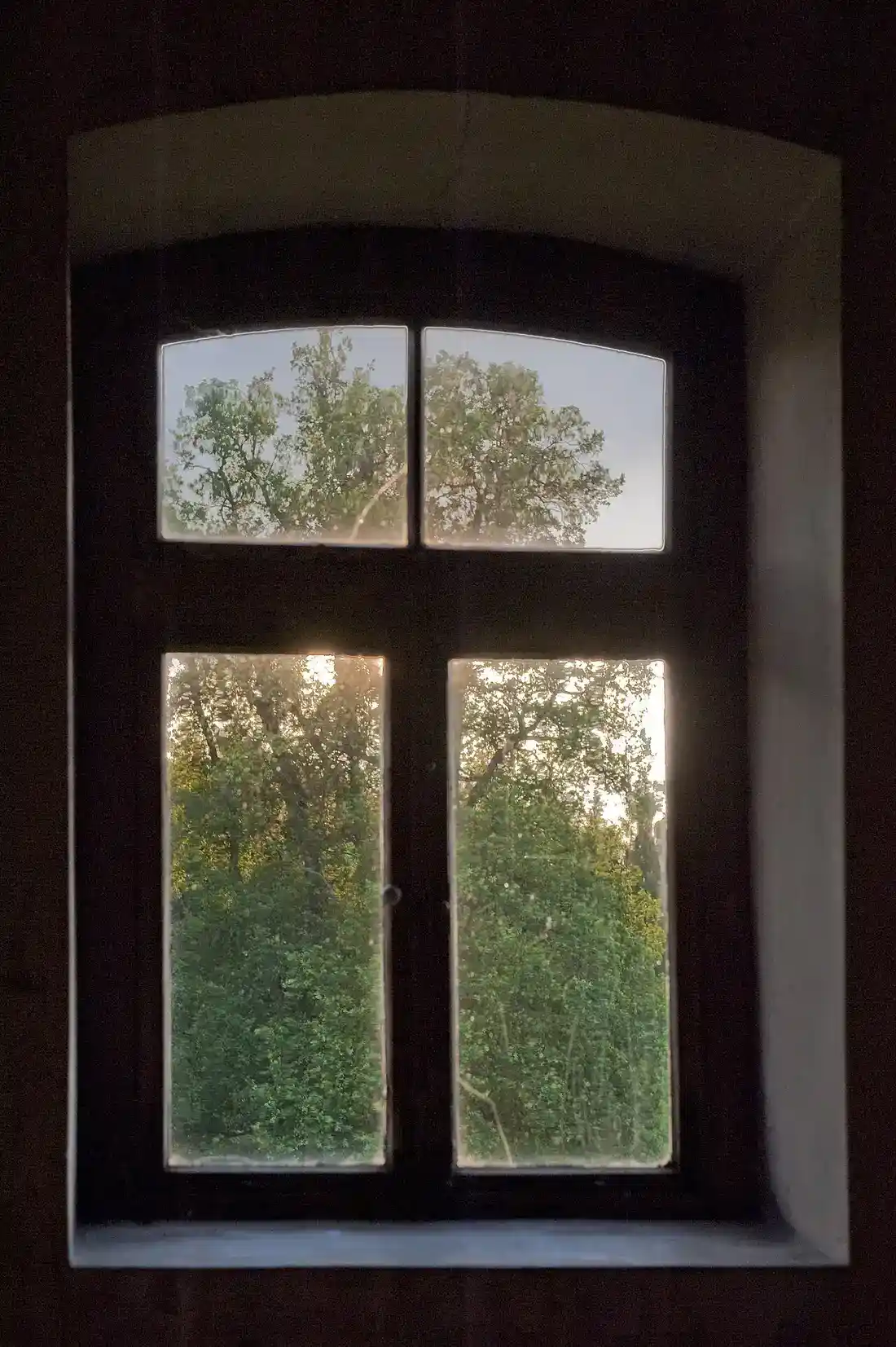
The frame decides. Sound frames make repair and glass work pay; failed frames make them loans against a dying asset.
Problem: The frame decides. Sound frames make repair and glass work pay; failed frames make them loans against a dying asset.
Solution: Read each window on its own evidence - fog, operation, frame condition - and phase the house: now, soon, later.
When to call: An assessment that gives per-window verdicts is worth more than a whole-house opinion in either direction.
It is the window question every El Paso homeowner eventually faces, usually standing in front of a fogged unit or fighting a stuck sash: fix this, or replace it? The answer is rarely whole-house. It is per-window, and it follows a logic this guide lays out - the same logic a good professional applies at the assessment.
Spring brings the third force - wind and dust. From February into May, winds pour off the mountains and across the desert floor, carrying fine dust that finds every gap in a window's weatherstripping and packs into tracks, weep holes and screens. A window that seals poorly in El Paso does not just leak air; it leaks the desert itself, and the dust line inside the sill tells the story after every storm.
Run a fingernail along the frame's lowest corners and press. Sound wood is hard; failing wood gives like cork. Vinyl should be rigid and uncracked; aluminum uncorroded. The frame is the window's foundation, and every other decision sits on it.
A sound frame with failed glass is a glass job. A sound frame with dead hardware is a repair. A rotted, cracked or twisted frame converts both into money spent dressing a structure that will fail around the new parts - the definition of a bad window investment.
Fog between the panes means the sealed unit has failed. That is a component failure, not a window failure - units are replaceable in sound frames, and the new unit usually outperforms the original. Fog alone never justifies replacing a good frame.
Single panes are the other glass question. The glass itself may be perfect while the specification is obsolete: one sheet cannot insulate a desert home. There the verdict is about comfort and bills, and it usually points to new units or full replacement on the sun walls first.

Windows that will not open, stay open, or lock are safety and security facts, not inconveniences. Most operation failures are mechanical - balances, rollers, hardware - and mechanical failures are repair's home ground.
The exception is operation failure caused by the frame: a sash that binds because the frame has racked, or a slider whose frame is worn at the track. Force the distinction at the assessment, because it flips the answer.
Patching makes sense while the patches hold. The signal to stop is sequence: when repairs arrive annually, on different windows, each buying a shorter peace, the house is telling you its stock has aged out together - the subdivision pattern El Paso knows well.
Replacement math improves with phasing honesty. The failed and the worst-exposed now, the tired on a two-year plan, the sound left alone: that is not indecision, it is portfolio management for glass.
Frames rotted, cracked or corroded through. Openings being changed in size or type. A whole elevation of single panes on a west wall. Historic storms no longer protecting failed sash. In these cases repair is the expensive option wearing a cheap costume.
And when repair is clearly right: sound frames, honest glass, tired machinery. Most El Paso windows presented for a verdict land here - which is why the verdict should come from someone paid to look, not to sell either answer.
A useful tiebreaker: ask of each window what it will need in the next ten years if you choose the smaller option now. A repaired sound frame needs little; a patched failing frame needs everything, repeatedly, plus the replacement eventually - at future prices, after years of discomfort.
The ten-year question converts a confusing present choice into a visible future cost, and it is remarkable how often it settles the argument the fog started.
A trustworthy verdict has three properties: it is per-window, it names the evidence (the soft corner, the failed seal, the racked frame), and it includes windows the professional advises leaving alone. A verdict missing any of the three is a sales document.
Ask for the leaving-alone list explicitly. The windows a company tells you not to touch are the strongest evidence that the rest of its advice is honest.
Your street has already run the experiment. In El Paso's subdivisions the housing was built in a single season, and the windows have been aging in public ever since: the neighbors who repaired sound frames are done, the ones who patched failing ones are on their third visit, and the ones who replaced are quiet.
Ask them. Not for prices - for verdicts. Which windows were worth saving on your street is local knowledge no brochure carries, and it is standing on your own sidewalk.
Repair has a philosophy worth stating: a window is a machine with renewable parts, and most of its misery is parts, not essence. Balances, rollers, locks, seals and weatherstripping are wear items by design - the manufacturer expected them to be renewed. A repair culture that renews them on schedule is how a window stock reaches its full designed life.
That is the service side of this guide's subject. When you are ready, the Window Repair page carries the process, the coverage by neighborhood and the number to call.
Fingernail and thumb at the low corners. Sort the house into sound and failing frames before anything else is decided.
Open, close, lock, every window. The operation list separates mechanical repairs from structural problems.
Fog maps the failed units at their clearest. Note which are fogged, which are single, which are cracked.
Failed frames and broken glass now; failed units and dead hardware soon; the sound and the shaded later. That sorted list is your plan.
Every frame press-tested at its low corners
Every sash run, locked and noted
Fogged and single-pane glass mapped on a cold morning
The house sorted into now, soon and later - in writing
A decision you can hold a professional to is a written per-window list: each opening, its verdict, the evidence for it, and the windows advised to be left alone. That document is the deliverable of a real assessment.
It should also carry the phased alternative - what the now-list costs against the whole-house plan - so the decision is made with both shapes of the future visible.
The professional's verdict is a physical examination, not an opinion: press the frame, run the sash, read the glass, check the drainage, then say the word - repair, glass, or replace - with the evidence attached. The willingness to advise leaving a window alone is the credential that matters most.
Letting the fogged unit argue for replacing its sound frame
Accepting a whole-house verdict from a partial walk
Repairing a frame that has already failed and calling it thrift
Replacing historic sash that a storm and a tune-up would have saved
Repair the sound, replace the failed, and let the frame cast the deciding vote on every window. Do that across the house and the fogged pane that started the argument becomes the smallest part of a plan you actually control.
A single pane is a view with almost no insulation; a sealed double-pane unit is a view with a working barrier against heat, cold and noise.
Read the GuideFog between the panes is a failed edge seal: the insulated unit has opened to the weather and filled with desert air and its moisture.
Read the GuideOld is not failed. El Paso's historic wood frames, if the wood is sound, are often better than what would replace them - and they take repairs, glass and storms beautifully. The press-test, not the birth year, decides.
It is going in sun order. The fogged three are the most exposed; their neighbors are on the same clock, a few seasons behind. Glass replacement phased by exposure is the standard answer.
Only when the frame has failed. On sound frames, repair and glass work are the highest-value spending in the window world. Ask the company to show you the failed frame - in person, with the press-test.
That is the normal El Paso plan. Replacement where frames failed or single panes bake, repair and glass where the stock is sound. Anyone who insists on uniformity is selling, not advising.
One call connects you with a window professional serving El Paso and the surrounding communities - assessment, repair, glass and full replacement.
📞 Call Now